
Are you planning an event for the office? Well, then, you know what a tedious task it is to account for all of the details and considerations to make the event a success. A good event manager must stay on top of all employee preferences and deadlines to do this.
Here is where a well-crafted corporate event planning checklist can help, as it organizes all the tasks that you need to do in one spot.
This is why we have created a detailed corporate event planning checklist that can be used universally to ensure the event is ready in all aspects! But before diving into the entire checklist, let us understand why you might want to use it to plan your next event with an effective event planning checklist.
Why is it Critical to Have a Checklist for Corporate Event Planning?
To understand exactly how a checklist for corporate event planning contributes to the success of your event, we have listed some bullet points that highlight its core benefits for event planners. Want a broader view? Check out this comprehensive guide on how to plan a corporate event from scratch.
- Enhanced Organization and Structure: A checklist helps break the event planning process into manageable steps, ensuring that every task, from initial brainstorming to post-event wrap-up, is accounted for.
- Minimized Oversight: With a checklist, there’s a significantly lower chance of forgetting critical details, like securing permits, booking AV equipment, or arranging catering.
- Budget Control: A checklist can integrate budget tracking, ensuring that expenditures align with the planned financial limits and prevent overspending.
- Clear Delegation: It facilitates better team coordination by outlining specific tasks, assigning them to team members, and setting accountability for each step.
- Professionalism: Corporate events often have high stakes. A well-executed checklist ensures that every detail aligns with the company’s standards and branding, leaving a positive impression on attendees.
The Ultimate 15-Step Corporate Event Planning Checklist
1. Define the intention behind the event

Most organised corporate events have a core intent decided by management. This intent can be anything, such as better team bonding, learning new skills, promoting physical activity, or just having a break from the corporate hustle and bustle.
Knowing and defining this intent helps you decide on elements of the event, like catering, corporate event games, and hosting mannerisms. To understand the exact intention of the event, it is best to consult the company’s management team to seek their counsel on what is expected from the event.
2. Seek out suggestions from the team

Speaking of seeking counsel, it is of utmost importance to consult the team that you will be organising the event for as well to know what their preferences are. Are they into high-energy events with much noise and hype, or are they more inclined to events with a chill yet engaging feel?
Knowing the team’s preferences in this regard will guarantee that your event will be planned specifically to their taste. This will not only make the overall event more enjoyable but will also give you a favourable image among the entire team for taking their preferences into account.
3. Set the theme and vibe

After gathering all of the data that you can about the expectations that the attendees and management have from the event, you can now move on to setting the theme for the event. Explore some creative corporate event theme ideas to inspire your planning. For instance, if the team prefers to have some physical activities involved, then you will likely have to go with an outdoor venue with an energetic feel.
Setting a specific theme also gives you the ability to envision the areas that have to be prioritised, such as catering, entertainment, or venue location. This step in the checklist acts as a bridge between the feedback from the attendees and your role in managing the event’s practical details. You can get inspired by these corporate event theme ideas to craft an engaging and memorable vibe.
4. Create a detailed budget
When you have a clear vision of what is required for the event to be spectacular, you can start piecing together a detailed budget for the entire event. Here is an example of what the budget plan can look like when it has been created after careful evaluation:
| Category | Cost (₹) |
|---|---|
| Venue Rental | 20,000 |
| Catering | 28,000 |
| Audio-Visual Equipment | 9,000 |
| Marketing & Promotion | 4,500 |
| Decorations & Setup | 10,000 |
| Entertainment/Speakers | 15,500 |
| Miscellaneous | 10,220 |
| Total | 97,220 |
5. Select an appropriate venue

As mentioned before, the overall theme and preferences dictated in your event will determine the best venue. Need help choosing the right event venue? Here’s what to consider. Ideally, the ideal venue for the event should be prioritised in terms of location. This is because its proximity to the office or the residences of the attendees must be low to ensure optimal access.
The venue should also handle the expected occupancy levels and the programs you have planned for the guests without feeling congested. This is important even if it overshoots the budget because the inability to cater to all guests is critical for any event.
6. Clarify the timings of the event in advance

To make sure that all of the attendees are on the same page, it is crucial to communicate the finalised timings of the event to allow attendees to confirm their availability. If the timings are not yet confirmed, it is still helpful to provide a general range of time as it gets the job done.
Note, once the timings are announced for the image, only change them as a last resort as it may lead to guests prematurely cancelling their plans. Adhering to the announced timings is the bare minimum standard that all event planners must adhere to avoid disappointment.
7. Plan out the event timeline with leeway for breaks

While events are supposed to be full of activities, individuals who attend corporate events might want some time to network and connect with each other. To facilitate this, you can include some break timings where the attendees can interact with others without missing out on the event.
Such an event schedule makes the event more engaging and feels less overwhelming for everyone who attends, which gives a good impression of being considerate. Accounting for these breaks into the overall event timeline is the final step to ensure that nothing gets skipped or rushed in the process.
8. Arrange catering services with considerations for dietary restrictions

Arranging catering services with considerations for dietary restrictions is crucial to ensure inclusivity, comfort, and satisfaction for all attendees. Dietary needs often stem from health conditions, religious practices, or personal choices, and failing to accommodate them can alienate guests or even pose serious health risks.
Providing diverse food options demonstrates a commitment to inclusivity and respect, ensuring goodwill and creating a positive impression of the event and its organisers. When attendees feel their needs are considered, they are more likely to enjoy the event and engage actively.
9. Get entertainment arrangements in order

In terms of entertainment arrangements, make sure that you pack your event with various programs such as games, questionnaires, and speeches to give it an all-rounding impact. However, weigh the importance of each program type according to the guests’ preferences to ensure they don’t get bored. For activity ideas that energize your attendees, explore these top 13 corporate event games for team interaction. For activity ideas that energize your attendees, explore these top 13 corporate event games for team interaction.
Additionally, you will also have to assign slots to each program in advance to avoid conflicts and confusion during the event. This means that you will have to give speakers, game organisers, and other entertainers a specific time limit to perform and hand over the stage.
10. Prepare decorations and branding
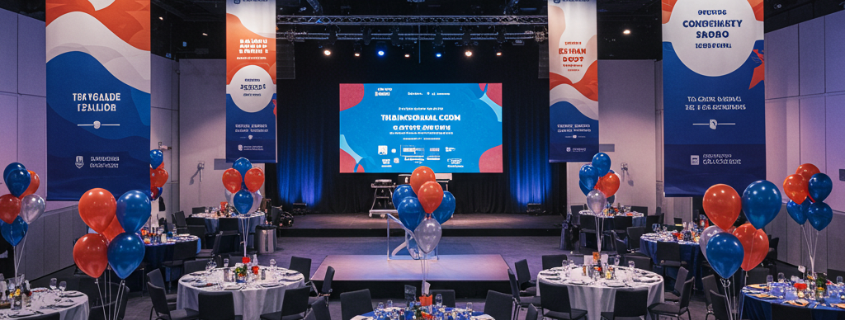
In any corporate event, all of the decorations should be in sync with the corporation’s branding theme to make the event feel exclusive and professional. The branding factor becomes especially important in cases where sponsors are involved.
Any decoration that you have in mind must also include enough branding elements to give the sponsors/organisers adequate visibility and recognition. Decoration elements that are best for branding include banners, digital screens, balloons, and table settings.
11. Plan transportation and parking
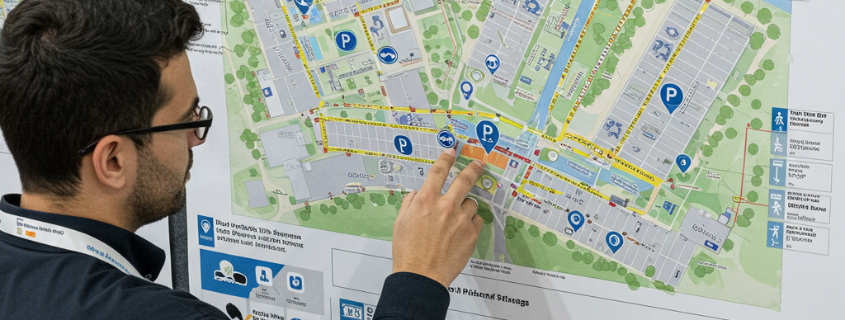
Getting the transportation and parking in order can be a lifesaver to convince attendees who are on the fence about coming to the event. This is understandable when you look at the issue of parking spots in any event venue.
Since you have already accounted for the number of attendees you’ll be expecting, planning to accommodate their vehicles will be easy as you know exactly what to ask the venue owner. As a rule of thumb, it is advised to account only for as many parking spots as needed, as excessive attendee numbers are usually not possible unless overbooking is at play.
12. Arrange prizes and giveaways

If the event that you’ve planned involves a lot of participation from the attendees, then it is always a good idea to include prizes and giveaways into the equation. The inclusion of these prizes creates an incentive for more attendees to participate and awakens their competitive spirit.
Knowing what prizes to select will also be considerably easy if you have asked for the team’s preferences according to this checklist. This way, you can know exactly what will get the participants fired up.
13. Test run everything
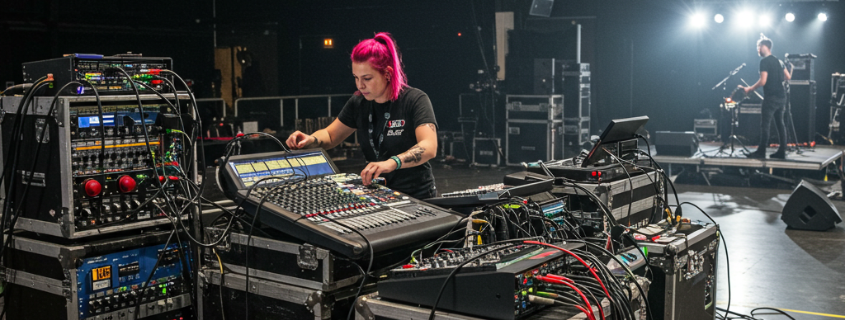
After all of the arrangements have been set up at the venue, it is time to give everything a test run to see if there are any errors or issues that flare up. In case there are any failures, you can solve them before the event or even arrange potential alternatives.
In this testing phase, you should especially test audio equipment and power sources as they are essential for any event to be successful and are also prone to frequent failures. This equipment covers everything from microphones and speakers to the lights and ventilation sources.
14. Create a backup plan
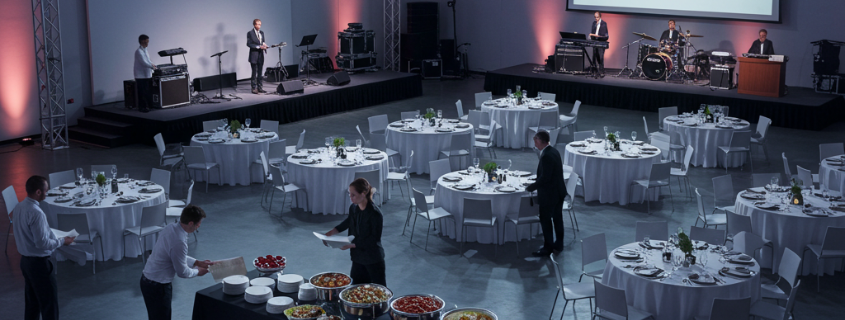
Keeping a corporate event lively, even in the case of unexpected outages, is done by creating backup plans for all elements, such as food and entertainment. An example of backup planning is pre-made snacking items that are ready in case your catering service falls short in any way.
Running with such backup plans in mind can help you tackle any situation that may arise before or during the event with confidence. But always keep these backup plans reserved for areas that are likely to encounter difficulties, such as decorations, parking, and food.
15. Communicate with attendees
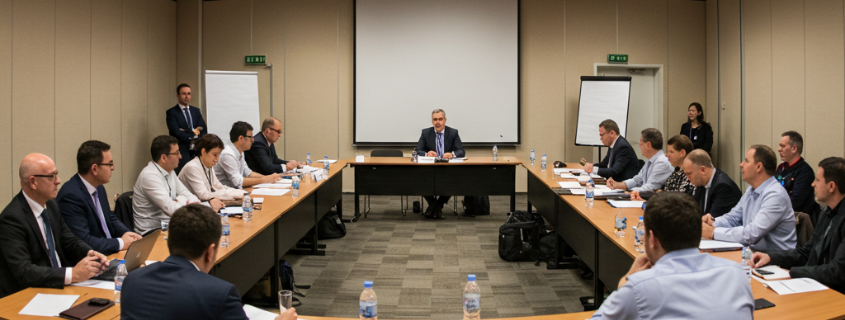
This is the final step of your event planning checklist, where you update the attendees on the finalised details and, during the event, communicate with them to gather feedback. Based on their responses and reactions, you can evaluate which parts of the events were especially mesmerising and the areas where you can improve.
Need Help Bringing Your Corporate Event to Life?
Explore trusted corporate event planners on EventBazaar.com who can handle everything from strategy to execution. Save time, reduce stress, and deliver a flawless event experience with the right professionals by your side.
Key Takeaways About Making A Corporate Event Planning Checklist
Overall, paying attention to all of the little details in an event with guest preferences in mind can make your corporate event go from mediocre to blockbuster. This is why a checklist that takes all aspects into account is so sought after by event planners and takes a considerable part of the overall planning time.
And if our carefully formulated checklists do the trick for you, then you should certainly make it a part of your planning routine for corporate events. Also, if you plan on organising more events, then a platform like Event Bazaar is the place for you as it has plenty of prospecting clients and other vendors looking for capable event planners.
FAQ About Making A Corporate Event Planning Checklist
How long should my corporate event planning checklist be?
The length of your corporate event planning checklist depends on the complexity and scale of the event. For smaller events, a checklist of 10 items may suffice. Larger events require more detailed planning, with checklists spanning 15–25 or more items. Always ensure the checklist covers all critical aspects, such as budgeting, venue booking, catering, marketing, guest logistics, and entertainment, without becoming unnecessarily detailed.
Can I plan a corporate event without a checklist?
While it is technically possible to plan a corporate event without a checklist, doing so is highly discouraged. Without a checklist, you risk overlooking critical tasks, mismanaging time, and increasing last-minute errors. A corporate event often involves numerous moving parts, including budget management, guest coordination, and contingency planning. Keeping track of all these details mentally or through scattered notes can lead to confusion and stress.
How do I know if my corporate event planning checklist covers everything?
To ensure your corporate event planning checklist covers everything, start by reviewing the key elements of event planning: venue, catering, budget, guest list, timeline, entertainment, logistics, marketing, and post-event evaluation. Cross-check your checklist with industry-standard event planning resources or templates to see if you’ve missed any major areas.