
The Ultimate Event Planning Checklist (2026)
From ideation to execution and post-event wrap-up, cover every phase of event planning with this ultimate checklist to ensure nothing slips through the cracks.
From ideation to execution and post-event wrap-up, cover every phase of event planning with this ultimate checklist to ensure nothing slips through the cracks.

Corporate events today are no longer limited to presentations, meetings, and networking sessions. Companies are increasingly investing in team-building activities for corporate events to improve employee engagement, strengthen workplace relationships, boost collaboration, and create a more positive work culture. Whether you are planning an annual corporate event, employee engagement program, office celebration, leadership retreat, or corporate outing, the right activities can make your event more interactive, memorable, and productive. In this blog, we explore the best corporate team-building activities trending in 2026 that are perfect for improving teamwork, communication, leadership, and employee bonding. Why Team Building Activities Are Important for Corporate Events Modern organizations use employee engagement activities not just for entertainment, but also to improve communication, teamwork, trust, and workplace morale. Benefits of team building activities for employees include: Better communication and collaboration Improved employee morale Stronger workplace relationships Increased productivity Better leadership and problem-solving skills Reduced workplace stress Improved company culture The right corporate event activities help employees connect outside their regular work environment and encourage stronger teamwork across departments. 1. Treasure Hunt Challenge Treasure hunts are among the most popular team-building activities for corporate events. Employees work together to solve clues, complete challenges, and achieve goals within a time limit. These activities improve teamwork, communication, leadership, and strategic thinking while keeping employees fully engaged throughout the event. Best For: Corporate outings, annual meetings, employee engagement events 2. Board Game Challenges Board games and strategy activities encourage analytical thinking, teamwork, and patience among employees. These indoor team-building games are ideal for smaller teams and office-based employee engagement sessions. Best For: Small office teams, indoor engagement activities 3. Fitness & Wellness Activities Fitness activities such as yoga sessions, meditation workshops, Zumba classes, and wellness challenges are becoming highly popular employee engagement activities. These activities promote a healthier workplace culture while reducing stress and improving employee well-being. Best For: Employee wellness programs, HR engagement activities 4. Corporate Cricket Tournament Corporate cricket tournaments are one of the most loved outdoor team-building activities for employees in India. Employees from different departments collaborate, fostering stronger workplace relationships and teamwork. Sports-based employee engagement activities also help improve morale and reduce workplace stress. Best For: Large organizations, sports days, outdoor corporate events 5. Cooking Challenge Cooking competitions are highly engaging employee engagement activities where teams prepare dishes together while managing tasks and responsibilities. Cooking challenges improve collaboration, communication, creativity, and teamwork in a relaxed environment. Best For: Corporate retreats, employee engagement events 6. Adventure & Resort Activities Adventure activities such as ziplining, rope courses, obstacle games, trekking, and resort challenges are excellent outdoor corporate team-building activities. These activities encourage employees to step outside their comfort zones while building trust, confidence, and collaboration. Best For: Corporate outings, leadership development programs 7. Team Painting Workshop Painting workshops encourage employees to work creatively together on collaborative artwork. These workshops create a stress-free and interactive environment while encouraging employee bonding. Creative team-building activities are increasingly becoming popular at modern corporate events. Best For: Creative teams, employee wellness programs, indoor engagement sessions 8. CSR & Tree Plantation Activities Corporate Social Responsibility activities, such as tree plantation drives, volunteering programs, and charity initiatives, help employees connect through meaningful experiences. These activities strengthen teamwork while creating a positive social impact. Best For: Employee engagement programs, leadership groups, CSR events 9. Quiz & Game Show Night Quiz nights and game shows are among the most fun corporate event ideas for employee entertainment and interaction. Teams participate in trivia rounds, rapid-fire games, and stage activities hosted by professional anchors. These activities improve participation and create memorable corporate event experiences. Best For: Corporate parties, annual celebrations, employee entertainment nights 10. Outdoor Camping & Bonfire Sessions Camping trips and bonfire sessions create informal environments where employees can interact naturally outside the office setup. These experiences help strengthen trust, communication, and team bonding. Outdoor retreats are ideal for leadership teams and long-duration corporate outings. Best For: Corporate retreats, leadership outings, team bonding trips How to Choose the Right Team Building Activity Before selecting team-building activities for corporate events, companies should consider: Team size Event budget Employee interests Indoor vs outdoor preference Event goals Duration of the event The best employee engagement activities are those that encourage participation, interaction, communication, and collaboration among employees. Frequently Asked Questions What are the best team-building activities for corporate events? Treasure hunts, Fitness Activities, cricket tournaments, cooking challenges, and adventure activities are among the best corporate team-building activities. Why are team-building activities important for employees? Team building activities improve communication, teamwork, employee morale, workplace relationships, and company culture. Which outdoor activities are best for corporate outings? Corporate cricket tournaments, adventure activities, trekking, camping, resort games, and obstacle challenges are excellent outdoor team-building activities. What are fun indoor team-building activities for office employees? Fitness activities, quiz nights, painting workshops, and cooking competitions are popular indoor employee engagement activities. Planning a Corporate Event? Looking for the best corporate event planners, employee engagement experts, activity organizers, venues, entertainers, anchors, photographers, and event professionals? Explore trusted vendors on EventBazaar.com and plan engaging corporate events with ease.

Find everything, from types of events, trends, budget breakdown and even a well-thought-out execution framework in this ultimate corporate event planning guide for 2026.

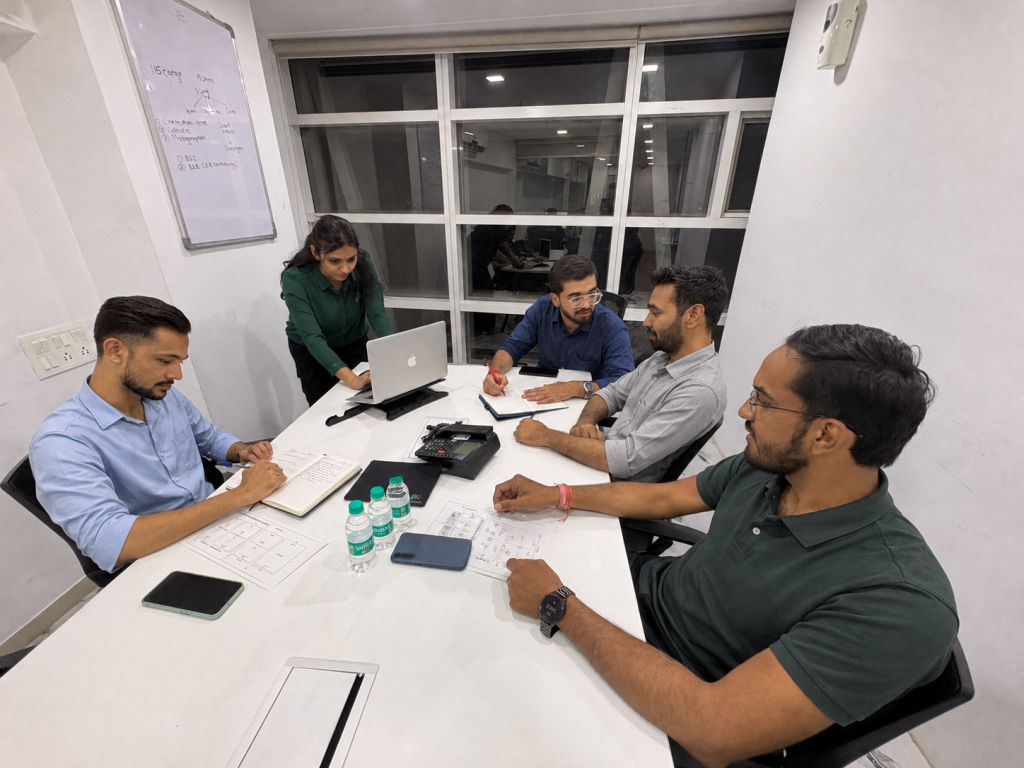
Are you planning an event for the office? Well, then, you know what a tedious task it is to account for all of the details and considerations to make the event a success. A good event manager must stay on top of all employee preferences and deadlines to do this. Here is where a well-crafted corporate event planning checklist can help, as it organizes all the tasks that you need to do in one spot. This is why we have created a detailed corporate event planning checklist that can be used universally to ensure the event is ready in all aspects! But before diving into the entire checklist, let us understand why you might want to use it to plan your next event with an effective event planning checklist. Why is it Critical to Have a Checklist for Corporate Event Planning? To understand exactly how a checklist for corporate event planning contributes to the success of your event, we have listed some bullet points that highlight its core benefits for event planners. Want a broader view? Check out this comprehensive guide on how to plan a corporate event from scratch. Enhanced Organization and Structure: A checklist helps break the event planning process into manageable steps, ensuring that every task, from initial brainstorming to post-event wrap-up, is accounted for. Minimized Oversight: With a checklist, there’s a significantly lower chance of forgetting critical details, like securing permits, booking AV equipment, or arranging catering. Budget Control: A checklist can integrate budget tracking, ensuring that expenditures align with the planned financial limits and prevent overspending. Clear Delegation: It facilitates better team coordination by outlining specific tasks, assigning them to team members, and setting accountability for each step. Professionalism: Corporate events often have high stakes. A well-executed checklist ensures that every detail aligns with the company’s standards and branding, leaving a positive impression on attendees. The Ultimate 15-Step Corporate Event Planning Checklist 1. Define the intention behind the event Most organised corporate events have a core intent decided by management. This intent can be anything, such as better team bonding, learning new skills, promoting physical activity, or just having a break from the corporate hustle and bustle. Knowing and defining this intent helps you decide on elements of the event, like catering, corporate event games, and hosting mannerisms. To understand the exact intention of the event, it is best to consult the company’s management team to seek their counsel on what is expected from the event. 2. Seek out suggestions from the team Speaking of seeking counsel, it is of utmost importance to consult the team that you will be organising the event for as well to know what their preferences are. Are they into high-energy events with much noise and hype, or are they more inclined to events with a chill yet engaging feel? Knowing the team’s preferences in this regard will guarantee that your event will be planned specifically to their taste. This will not only make the overall event more enjoyable but will also give you a favourable image among the entire team for taking their preferences into account. 3. Set the theme and vibe After gathering all of the data that you can about the expectations that the attendees and management have from the event, you can now move on to setting the theme for the event. Explore some creative corporate event theme ideas to inspire your planning. For instance, if the team prefers to have some physical activities involved, then you will likely have to go with an outdoor venue with an energetic feel. Setting a specific theme also gives you the ability to envision the areas that have to be prioritised, such as catering, entertainment, or venue location. This step in the checklist acts as a bridge between the feedback from the attendees and your role in managing the event’s practical details. You can get inspired by these corporate event theme ideas to craft an engaging and memorable vibe. 4. Create a detailed budget When you have a clear vision of what is required for the event to be spectacular, you can start piecing together a detailed budget for the entire event. Here is an example of what the budget plan can look like when it has been created after careful evaluation: Category Cost (₹) Venue Rental 20,000 Catering 28,000 Audio-Visual Equipment 9,000 Marketing & Promotion 4,500 Decorations & Setup 10,000 Entertainment/Speakers 15,500 Miscellaneous 10,220 Total 97,220 5. Select an appropriate venue As mentioned before, the overall theme and preferences dictated in your event will determine the best venue. Need help choosing the right event venue? Here’s what to consider. Ideally, the ideal venue for the event should be prioritised in terms of location. This is because its proximity to the office or the residences of the attendees must be low to ensure optimal access. The venue should also handle the expected occupancy levels and the programs you have planned for the guests without feeling congested. This is important even if it overshoots the budget because the inability to cater to all guests is critical for any event. 6. Clarify the timings of the event in advance To make sure that all of the attendees are on the same page, it is crucial to communicate the finalised timings of the event to allow attendees to confirm their availability. If the timings are not yet confirmed, it is still helpful to provide a general range of time as it gets the job done. Note, once the timings are announced for the image, only change them as a last resort as it may lead to guests prematurely cancelling their plans. Adhering to the announced timings is the bare minimum standard that all event planners must adhere to avoid disappointment. 7. Plan out the event timeline with leeway for breaks While events are supposed to be full of activities, individuals who attend corporate events might want some time to network and connect with each other. To facilitate this, you can
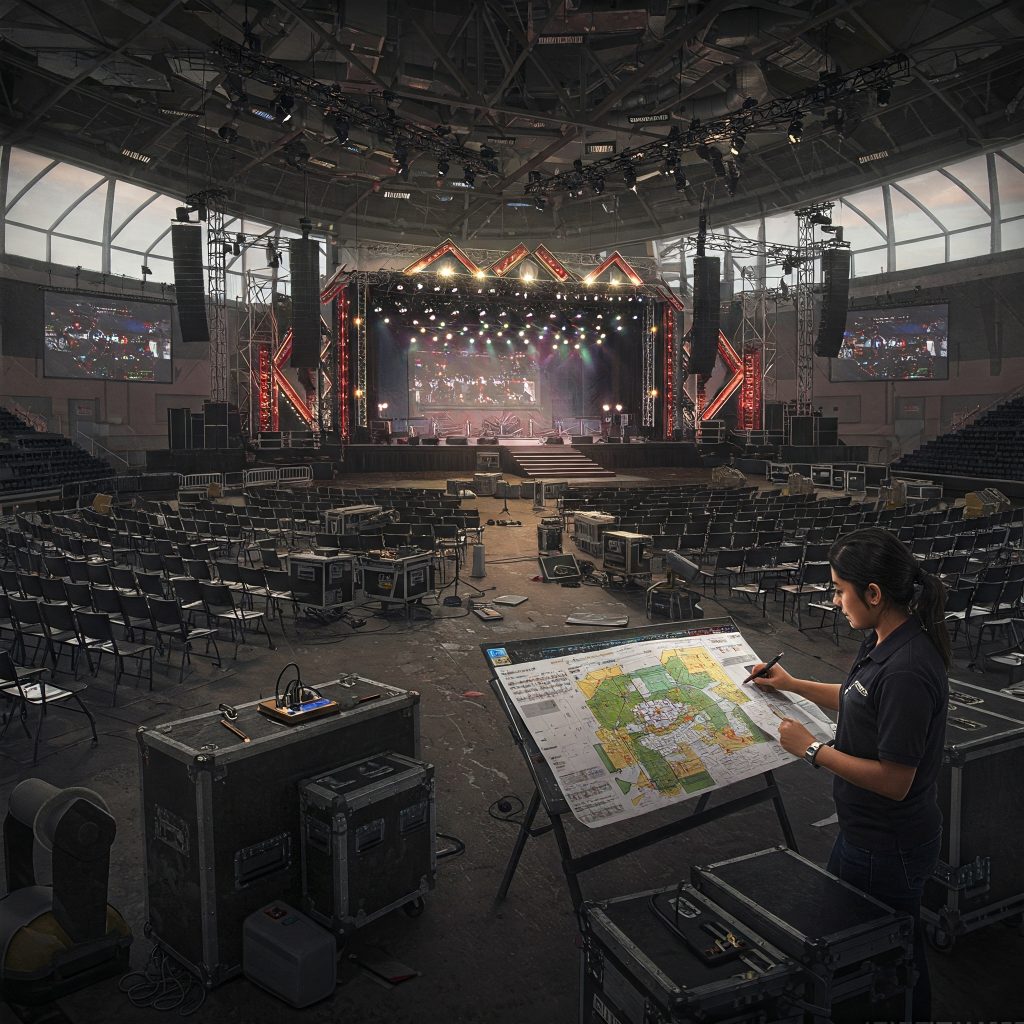
Choosing a venue for your upcoming event can be a thrilling adventure as you get to explore varying biomes, destinations, and conditions. However, in this pursuit, several things to consider while choosing your event venue may get overlooked, Before selecting a venue, it’s helpful to follow an event planning checklist to ensure all aspects are covered. which may, in turn, lead to delays or failures during the event day. This is why we have compiled a list of essential considerations to keep in mind while finding the ideal venue to ensure that everything goes according to plan. In this list, we will be going over both small and big details, such as ambient noise and packing accommodations, to give you complete coverage. Top 11 Event Venue Considerations to Keep in Mind The eleven considerations that we have selected for selecting venues primarily revolve around the perfect accommodation for guests. This is because the comfort level and experiences are what make any event successful, and the venue has to be capable of handling those requirements. So, without any further ado, let us check out which considerations will help you achieve perfection with your venue. 1. Total Venue Size As a first requirement, it is essential to know if the venue’s size can accommodate all of the planned guests and even handle last-minute additions. However, this is a double-edged sword, as getting a venue that is too large can make the event feel disconnected and dull. Ideally, you will want an event venue with 10% more visitors than originally planned. The venue size will also dictate how many decorations and dedicated areas you can fit in as well. If your event is going to have dedicated areas for activities, dining, and networking, then you will have to calculate if the venue can accommodate that in advance. Getting the right sized venue is also a step forward in terms of cost optimisation as it prevents you from overspending on areas that you don’t need. 2. Venue Availability Your chosen venue’s availability is something that you will have to confirm as soon as possible. This is because when looking for venues, it is not uncommon to see your preferred venue be booked by other parties at the last moment. Venue agents also tend to showcase venues that may not be available on the dates that you have planned. That is why it is advised that you make your event timings and schedule clear from the start. Popular venues also have strict time limitations, so you will have to plan your event timeline accordingly to avoid any time overruns. 3. Venue Location Choosing the location of your event is undoubtedly going to be the most difficult part in terms of finding the perfect venue. Overall, the selection of the venue location narrows down to finding an accessible area while keeping the costs down. Often, people looking for a venue make the mistake of choosing an overly rural area to host events. This is considered a mistake as it makes the event far less accessible and reduces the chances of guests showing up on time. It also limits your access to service staff and event resources such as electricity and decorations. Knowing all of these factors should help you find an event venue that has the perfect balance in terms of cost and accessibility. 4. Parking Accommodations Parking space is a critical factor when choosing an event venue because it directly impacts the convenience and satisfaction of your guests. A venue with adequate parking ensures that attendees can arrive stress-free, without the frustration of circling the area to find a spot. This is especially important for events expecting a large turnout or those held in areas with limited public transportation options. Furthermore, sufficient parking can enhance safety, as guests won’t have to park far away and walk long distances, particularly at night. Providing accessible and nearby parking demonstrates consideration for your guests’ comfort, setting the tone for a positive event experience. 5. Power Outlets and Generators The venue of your selection has to be able to accommodate the energy needs of your event. Large speakers, lighting elements, and appliances all draw a lot of power, and not all venues are built with such sanctioned loads in mind. The problem applies to both urban and rural event venues. This is why you must first check if the venue has enough outlets to power all of the electronics and arrange extensions or load capacity adjustments accordingly. Alternatively, you can resolve this problem with simple generators that also serve as backup power in case of power outages. 6. Availability of Catering & Service Staff The availability of service and catering staff is essential for the smooth execution of any event, as they are the backbone of the guest experience. The professional staff ensures that food and beverages are served efficiently, tables are cleared promptly, and any unforeseen issues are handled with discretion. However, some areas might limit your access to professional service staff, leading to higher hiring costs or settling for sub-par service options. And without sufficient and capable staff, even the most well-planned events risk falling into disarray, potentially leaving guests dissatisfied. 7. Ambient Noise and Traffic One of the most pervasive issues of holding an event in Indian cities is the potential for a lot of ambient noise, which may interfere with the entire vibe of the event. To check if your event might be prone to such intrusions of ambient noise, a great idea would be to visit the venue a week earlier at the time and day on which it is planned to measure noise levels. Additionally, it is recommended that you plan your events before or after cultural holidays to make sure that the celebrations and your event’s vibe do not clash. Not to mention, timing the event away from peak traffic hours will also help you reduce intrusive noises and create better immersion. 8. Existing Decor Most venues have a cache of
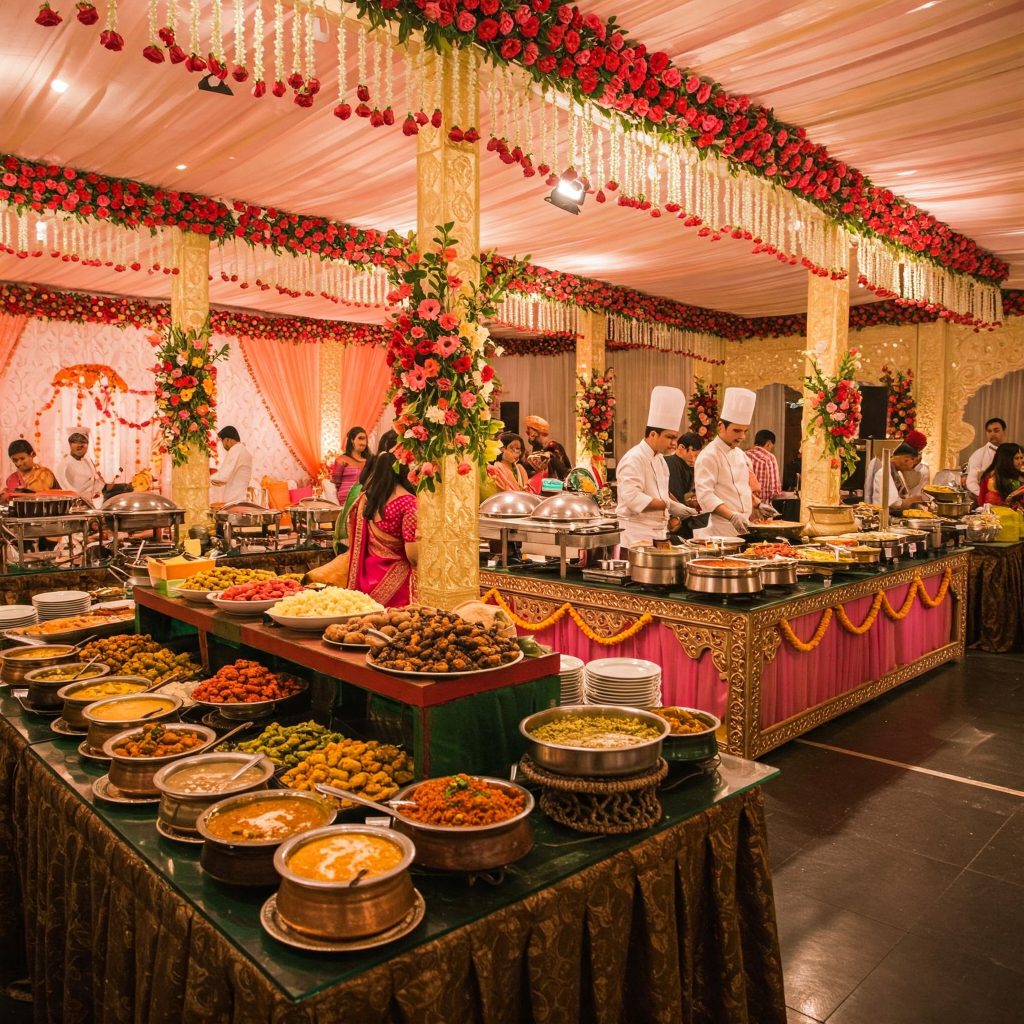
Ah, Indian weddings – where the aroma of fresh biryani mingles with the sound of laughter and celebration! When we say “shaadi ka khana,” it’s not just about filling plates; it’s about creating memories that last forever. In India, food isn’t just part of the celebration—it’s the soul of it! Whether it’s a lavish shaadi or a small family puja, catering is no longer just about feeding people. It’s about crafting an experience that lingers on your taste buds and in your memories. Ready to know more? We’ve got nine different types of catering services that can make your next event so special your guests won’t stop talking about it! 9 Types of Catering Services for Your Next EventSponsors Planning an event involves countless decisions, and food is undoubtedly one of the most memorable aspects for your guests. Choosing the right catering service can make or break the overall experience. Here are 9 types of catering services to help you pick the best fit for your next event: 1. Full-Service Catering Full-service catering is the ultimate choice if you dream of hosting an event where everything flows seamlessly. This style is designed for those who want every detail to exude luxury and perfection. Whether it’s your daughter’s wedding or a milestone corporate gathering, these culinary experts work their magic behind the scenes. The moment you share your vision with them, they become your event’s backbone – planning every flavour, managing every plate, and ensuring your guests can’t stop talking about the food for months to come. After all, why should you spend time worrying about the biryani when you can be busy collecting compliments? What’s Special? Customized Menus: Imagine a curated menu that reflects your preferences, from classic Indian delicacies like butter chicken and dal makhani to global favorites like risotto and sushi. Whether you want a Mughlai feast or a continental spread, the options are endless. Impeccable Service: From arranging elegant dining setups to ensuring guests are served with finesse, the staff handles everything—setup, service, and cleanup—with professionalism. Themed Presentations: Whether it’s a royal Rajasthani theme or a modern minimalist vibe, the presentations are designed to wow your guests and enhance the event’s ambiance. Why this works? Full-service catering often includes additional perks like floral arrangements, lighting, and even entertainment coordination, making it the go-to option for events where the “wow” factor is non-negotiable. Best Suited For: Weddings, corporate galas, and large-scale events. 2. Wedding Catering Indian weddings are synonymous with grandeur, and the food takes center stage in these celebrations. Wedding catering blends the richness of tradition with modern culinary innovations to deliver an unforgettable experience. Want to pair the perfect food with a stunning setting? Don’t miss the latest mandap decoration trends for an elevated wedding experience. After all, what’s a big fat Indian wedding without uncles debating whether the paneer was better than the biryani? What’s Special? Lavish Thalis: Imagine a feast featuring signature regional dishes like Rajasthani dal baati churma, Bengali fish curry, and Kerala-style appams. Thalis are a reflection of India’s culinary diversity. Live Counters: The excitement of watching chefs whip up fresh pani puri, steaming dosas, or sizzling kebabs adds a dynamic vibe to the event. Fusion Cuisine: Modern twists on classics, such as momo manchurian or masala sushi, ensure there’s something for everyone. Why this works?Wedding catering is designed to reflect the couple’s tastes while honoring the cultural significance of the occasion. Guests leave with full hearts and even fuller plates. Best Suited For: Shaadis, sangeets, and receptions where the food becomes a highlight of the celebration. 3. Corporate Catering Gone are the days of boring office sandwiches! Today’s corporate catering is where professionalism meets pizzazz. Whether it’s impressing potential clients or treating your hardworking team, these culinary experts know how to keep energy high and taste buds happy, all while maintaining that perfect corporate vibe. For formal settings like corporate events, check our corporate event planning checklist to streamline everything from seating to catering coordination. What’s Special? Healthy Options: Power-packed dishes like quinoa salads, grilled paneer wraps, and fresh fruit platters energize your team while catering to diverse dietary needs. Professional Presentation: Sleek setups and neatly plated dishes reflect the professionalism of your company. Quick Service: Caterers understand time constraints and ensure food is served efficiently without compromising quality. Why this works?Food tailored to professional environments helps create a relaxed yet productive atmosphere. Impressing clients and delighting employees becomes effortless. Best Suited For: Conferences, product launches, and team-building events where food plays a supporting but vital role. 4. Buffet Catering Buffet catering brings vibrancy and variety to your event. It’s a casual and versatile option where guests can serve themselves and enjoy a wide array of dishes. Creative setups like dessert walls, salad bars, or themed counters (like “Chaat Street”) enhance the experience. What’s Special? Diverse Menu: From starters like crispy pakoras to mains like biryanis and desserts like gulab jamuns, buffets offer something for everyone. Live Counters: Guests can relish freshly prepared dishes like hot jalebis, sizzling tikkas, or even international fares like pasta. Interactive Experience: The self-serve format encourages mingling and adds an element of fun. Why this works? Buffets are cost-effective and perfect for large gatherings where guests have different preferences. The variety ensures no one leaves hungry. Best Suited For: Family get-togethers, weddings, or festivals where food is at the heart of the celebration. 5. Plated Dinner Catering Plated dinner catering offers a sophisticated dining experience, perfect for more intimate or formal events. Guests are treated to beautifully presented meals served with finesse. Plated dinners often include multiple courses, from appetizers to desserts, each served in a coordinated sequence. What’s Special? Gourmet Cuisine: Think dishes like saffron risotto, tandoori lamb chops, or chocolate fondant, all plated to perfection. Attention to Detail: Every plate is crafted to look and taste exquisite, ensuring a luxurious experience for each guest. Personalized Service: Servers attend to every table, creating a refined atmosphere. Why this works? This style combines exclusivity and